Tipico at the 2026 World Cup: How Every Match Was Streamed in Germany
For football supporters in Germany, the 2026 FIFA World Cup created an unusual viewing choice. Tipico did not replace the established television coverage from MagentaTV, ARD or ZDF, yet it did give eligible betting customers access to a live video feed of every match. The arrangement covered all 104 fixtures played between 11 June and 19 July 2026, including group games, the new round of 32, the later knockout stages and the final. Access came with strict account and viewing conditions, so the service worked differently from a normal television subscription or free-to-air stream. This article explains what Tipico actually offered, who could use it in Germany, why the picture appeared in a restricted player and how the service fitted alongside the country’s official World Cup broadcasters.
What Tipico Offered During the 2026 World Cup
Tipico’s World Cup service was a live betting stream covering all 104 matches rather than a conventional television package. It was the first all-match World Cup stream of this kind offered by a licensed sports bookmaker to customers in Germany. It was available through tipico.de and the Tipico Sports Betting App for the duration of the tournament. The scale of the offer mattered because the 2026 competition was the first men’s World Cup with 48 national teams and 104 fixtures. A viewer who met the account conditions could therefore follow matches that were not shown live by ARD or ZDF, including a substantial number of group-stage and knockout games reserved for paid coverage elsewhere.
The video rights came through Stats Perform, which FIFA appointed as its official distributor for betting data and betting streaming. That distinction explains how Tipico could show every match without owning Germany’s main television rights. Stats Perform supplied a rights package designed for licensed bookmakers in selected territories, while Telekom Deutschland remained the holder of the full German TV rights. Tipico was therefore operating within a separate betting-stream category. The feed was official, but the way it could be displayed and combined with other services was more limited than the broadcast delivered through MagentaTV.
This difference was important for users comparing the available options. Tipico’s offer was not a free public stream and did not mean that every visitor to the site could watch the tournament. It functioned as an additional service for qualifying account holders who were already using a licensed German bookmaker. MagentaTV remained the main choice for full-screen, high-quality coverage of every fixture, while ARD and ZDF provided a broad free-to-air selection. Tipico filled a narrower role: it gave active, verified customers a way to keep a match visible on a computer or mobile device without purchasing a separate World Cup television package.
Who Could Watch and What Was Required
Access was limited to users located in Germany with a registered and verified Tipico sports-betting account. Registration alone was not enough. The account had to pass Tipico’s identity checks, which are used to confirm age and personal details under German gambling rules. In practical terms, a new customer needed to complete verification with an accepted identity document before relying on the World Cup stream. Anyone using an unverified account, an account registered outside the permitted German service or an account affected by restrictions could not assume that the video player would be available.
Tipico also required a sign of recent account activity. A customer qualified by holding a positive balance in the active account or by having placed a bet during the previous 24 hours. These were alternative conditions, so a user did not necessarily have to place a new wager before every match if money remained in the account. Equally, a zero balance did not automatically remove access when a qualifying bet had been made within the stated period. The rule linked the video service to active betting customers rather than turning it into an open substitute for German television coverage.
Once the conditions were met, the user could sign in on the Tipico website or open the sports-betting app, select the relevant World Cup match and start the available live video. The stream was designed for individual account use and could not be treated like a public broadcast link. Viewers also needed to remain aware that location checks, account status and technical compatibility could affect access. The most reliable approach during the tournament was to complete verification in advance, check the account balance or recent-bet requirement before kick-off and use the official Tipico site or app rather than third-party links claiming to provide the same feed.
How the Tipico Stream Worked on Different Devices
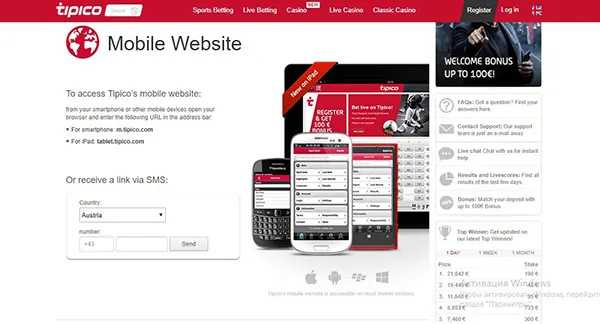
The World Cup feed could be viewed on desktop computers, laptops, tablets and smartphones. That covered the devices most customers already used for checking fixtures or managing their accounts, but the player did not behave like a standard full-screen sports stream. On a computer, laptop or tablet, the maximised video occupied roughly one third of the display. On a smartphone, it could occupy around half of the screen. These limits were part of the stated service conditions, not simply a design choice that users could remove through ordinary player controls. Smart TVs, games consoles and set-top boxes were not included in the announced device list, which reinforced the service’s role as a compact personal stream rather than a household television feed.
The restriction became particularly noticeable during the opening stages of the tournament. Some viewers expected a conventional full-screen picture and interpreted the small window or limited image quality as a fault. In reality, the Tipico feed was supplied under a betting-stream rights package with a deliberately restricted viewing format. It was suitable for following the action, checking the state of a match or watching when another legal broadcast was unavailable, but it was not intended to reproduce the living-room experience offered by a television provider showing the match in full resolution across the entire screen.
Device choice therefore had a direct effect on the experience. A laptop or tablet offered more physical screen space around the restricted player, making the action easier to follow than on a small phone. A smartphone remained convenient when travelling within Germany or watching away from a television, but the permitted player size reduced detail and made extended viewing less comfortable. Stable internet access was also necessary, especially during high-demand fixtures. Users who wanted uninterrupted, large-screen coverage were better served by MagentaTV or the relevant ARD or ZDF stream when the match was included in free-to-air coverage.
Why the Video and Betting Areas Stayed Separate
Tipico kept the live video and the betting product in separate views. A user watching the match had to leave the streaming screen to open the betting section, and the video stopped when the product page appeared. This meant customers could not keep the official match feed running beside live betting markets within the same Tipico view. The separation may have felt less convenient than a split-screen layout, but it was a central part of how the service was presented to German users.
The reason was not only commercial. German gambling rules place tight limits on the connection between live sporting pictures, live match information, betting advertising and in-play wagering. A seamless screen encouraging immediate bets during the action would create legal concerns that do not apply in the same way to an ordinary sports broadcaster. By interrupting the stream when users moved to the betting area, Tipico created a visible boundary between watching the match and choosing whether to place a wager. The design also clarified that the stream itself was not a promise of constant betting access during every moment of play.
For customers, the practical consequence was simple: the Tipico service worked best as a compact match viewer, not as an integrated command centre for video and live odds. Anyone deciding to leave the feed to check a market had to accept that the picture would stop and then be reopened afterwards. That pause also gave users a natural moment to consider whether a bet was necessary rather than reacting instantly to a goal, card or short spell of pressure. Betting remained optional, and the availability of a stream did not change the need to set limits, avoid chasing losses and treat gambling as paid entertainment rather than income.
How Tipico Compared with German Television Coverage
Germany’s main World Cup rights remained with Telekom Deutschland. Through MagentaTV, Telekom showed all 104 matches live, with 44 fixtures available exclusively through its paid service. The coverage was built as a full television production, including large-screen viewing, UHD availability for supported setups, studio presentation, commentary and analysis. For supporters who wanted every match in the strongest available viewing format, MagentaTV was the comprehensive option. Tipico’s smaller betting stream did not alter Telekom’s status as the principal German rights holder.
ARD and ZDF jointly broadcast 60 of the 104 matches live and free to receive, with 30 games on each broadcaster. Their package included the opening match, all Germany matches, both semi-finals and the final, as well as selected fixtures from the group and knockout stages. They also provided highlights and wider reporting from matches outside their live allocation. For many viewers primarily interested in the German national team and the major deciding games, this free coverage was sufficient. The limitation appeared when a supporter wanted to watch one of the 44 fixtures not carried live by either public broadcaster.
Tipico offered another legal route for eligible customers during those gaps, but the trade-off was clear. It covered every fixture without a separate MagentaTV subscription, yet it required a verified betting account, qualifying balance or recent wager, use within Germany and acceptance of a restricted player. It also lacked the full broadcast presentation associated with the main television services. The three options therefore served different needs: ARD and ZDF for selected free coverage, MagentaTV for complete premium television coverage and Tipico for compact all-match access tied to an active sports-betting account.
What German Users Could Learn from the 2026 Model
The strongest feature of Tipico’s 2026 offer was its breadth. A qualified customer could access every World Cup fixture from one account, including matches that otherwise required MagentaTV in Germany. This was particularly useful for followers of smaller national teams, viewers interested in simultaneous group-stage games and customers watching away from their main television. The offer also showed how official betting-stream rights can sit alongside national TV agreements without giving the bookmaker the same product or presentation rights as the main broadcaster.
The limitations were equally significant. Access depended on account verification and activity, the player size was restricted, the stream stopped when the betting area opened and the overall experience was not designed for a full television screen. Users who joined only because they expected a free, high-definition alternative to MagentaTV were likely to find the conditions disappointing. The service made more sense for existing Tipico customers who valued convenient access to a particular match than for households looking for the best way to watch the entire tournament together.
As of 2026, Tipico’s World Cup arrangement should be understood as a tournament-specific rights deal rather than a permanent promise for future FIFA competitions. Streaming rights, territorial rules and bookmaker conditions can change from one event to the next. The practical lesson is to check the source of the rights, the account requirements and the display limits before relying on any bookmaker stream. During the 2026 World Cup, Tipico genuinely provided qualified users in Germany with access to all 104 matches, but it did so through a controlled betting-stream service that remained clearly separate from Germany’s normal television coverage.